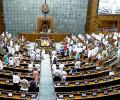
The dramatic postponement came while members were voting on the committee's five principal recommendations, making it an unprecedented moment in the functioning of a parliamentary committee.

A joint parliamentary committee has received an extension to submit its report on a significant bill. The Constitution (130th Amendment) Bill, 2025, proposes the removal of a prime minister, chief minister, or other ministers if they are jailed for 30 consecutive days on serious charges. The committee, chaired by BJP MP Aparajita Sarangi, needs further consultations before finalising its report.
The Goa government has decided not to introduce its anti-religious conversion bill during the ongoing monsoon session of the state assembly, following significant pushback from legislators representing the minority community.

The Goa cabinet has approved the Goa Prohibition of Unlawful Conversions of Religion Bill, 2026, which proposes stringent penalties, including life imprisonment, for religious conversions carried out through force, fraud, or marriage. The bill will be tabled in the state assembly's monsoon session.

The Lok Sabha has referred the contentious Foreign Contribution (Regulation) Amendment Bill, 2026, to a 31-member joint parliamentary committee for thorough scrutiny.

More than half of the bills introduced in the 18th Lok Sabha have been passed by both Houses in the same session, a significant acceleration compared to previous terms, raising concerns about the time available for legislative scrutiny and stakeholder consultations.

The Lok Sabha's monsoon session concluded on Thursday, marked by relentless opposition protests over critical issues like the NEET paper leak and police action on students, yet saw the passage of several key bills without extensive debate. Home Minister Amit Shah expressed readiness to debate the student protest issue, urging the speaker to allocate time.

Ten days after both Houses of Parliament were adjourned sine die, the Monsoon session is yet to end formally, giving rise to speculation that the government wants to pass a key legislation without convening a new session.

The Lok Sabha introduced four significant bills on Monday, including amendments to mines and minerals regulations, the establishment of a National Tribunals Commission, and the renaming of Kerala to Keralam, all while facing continuous protests from opposition members demanding a discussion on the July 20 police crackdown on students.

Major bills, including those on women's reservation, delimitation, and the Foreign Contribution (Regulation) Act (FCRA), face an uncertain future in the ongoing Monsoon session of Parliament due to persistent opposition protests and a lack of consensus.

The Tamil Nadu Assembly has adopted crucial resolutions against the National Eligibility cum Entrance Test (NEET) and the Foreign Contribution (Regulation) Amendment Bill, 2026, with the lone BJP member opposing both.

The Indian Parliament is scheduled for a significant legislative day, with the Lok Sabha set to consider and pass the Public Examinations (Prevention of Unfair Means) Amendment Bill, 2026. Concurrently, the Rajya Sabha will introduce the Micro, Small and Medium Enterprises Development (Amendment) Bill, 2026, and pass the Prevention of Insults to National Honour (Amendment) Bill, 2026, highlighting a busy agenda for both houses.
GSTN has put on hold its planned enhancements to the e-way bill system, providing businesses with crucial time to adapt to the proposed changes amid widespread industry concerns.

The Congress party has issued a whip to its MPs in both the Rajya Sabha and Lok Sabha, mandating their presence from August 10-12 for discussions on "very important" issues. This directive comes amidst reports of potential debates on the Foreign Contribution (Regulation) Amendment Bill, 2026, and a Constitution Amendment Bill concerning delimitation, though the government's official business list did not explicitly mention these.

The US Senate has overwhelmingly approved a bill, the Lindsey O. Graham Sanctioning Russia and Iran Act of 2026, which aims to punish Russia and its major petroleum product buyers, including China and India. The legislation allows the US President to impose 100 per cent tariffs on goods from the top five importers of Russian oil and gas, and also extends sanctions on Iran's energy sector. The bill, championed by the late Senator Lindsey Graham, now moves to the House of Representatives for further approval.

Parliamentary Affairs Minister Kiren Rijiju met Leader of Opposition Rahul Gandhi to discuss resolving the persistent deadlock in the Lok Sabha's monsoon session, focusing on the Delimitation Bill and FCRA Bill, though no immediate commitment was secured from the Congress leader.

The government is considering sending 'The Foreign Contribution (Regulation) Amendment Bill, 2026' to a joint committee of both houses of Parliament for further examination, even as the Congress and some other opposition parties have demanded that it be withdrawn, sources said on Tuesday.

President Droupadi Murmu gave assent to a bill which now provides 'Vande Mataram' with the same legal protection and status as India's national anthem, 'Jana Gana Mana'.

The Lok Sabha passed two Bills, including one to rename Kerala as Keralam, without debate as Opposition members continued their protests, demanding Union Home Minister Amit Shah's presence to address police excesses against student protesters and alleged Ram temple fund irregularities.

A veteran White House reporter has revealed that the Clinton administration used a decoy aircraft during President Bill Clinton's high-risk visit to Pakistan in 2000, a security measure disclosed to journalists off-the-record due to the significant dangers involved.

Congress president Mallikarjun Kharge has said that the Congress will oppose the Foreign Contribution (Regulation) Amendment Bill and the issue will also be discussed at the meeting of floor leaders of opposition parties on Monday.

Mizoram Chief Minister Lalduhoma met Union Home Minister Amit Shah regarding the Foreign Contribution (Regulation) Amendment Bill, 2026. Shah assured that the bill would not be retrospective. Various church and minority organisations have expressed concerns about the bill's impact on NGOs, schools, and healthcare units, urging its withdrawal or referral to a joint parliamentary committee.
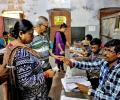
A joint parliamentary committee tasked with examining the 'One Nation One Election' bill has been granted an extension until the end of the Winter session to submit its report. The 41-member committee is reviewing the Constitution (One Hundred and Twenty-Ninth Amendment) Bill, 2024, and is conducting nationwide consultations on implementing simultaneous elections for Lok Sabha, state assemblies, and local bodies by 2029.

Amidst opposition protests, the Lok Sabha has successfully passed a crucial bill to expand the Supreme Court's judicial strength from 34 to 38 judges.

The Madhya Pradesh cabinet has approved the draft Uniform Civil Code (UCC) bill, which will be introduced in the state assembly's monsoon session. The proposed legislation, excluding the tribal community, addresses marriage, live-in relationships, adoption, and inheritance, aiming for women's empowerment and social harmony. Chief Minister Mohan Yadav highlighted broad support and criticised the Congress for its stance.

Kiren Rijiju has strongly criticised the Congress for allegedly 'unfairly disrupting' the recent monsoon session.

The Shiromani Akali Dal (SAD) has called for the immediate passage of the women's reservation bill and the delimitation bill, advocating for a uniform 50 per cent increase in seats for all states to ensure fair and equitable representation.
BJP sources said the government would introduce a fresh Bill on the issue and has reached out to parties that opposed the earlier legislation.

India's Ambassador to the US, Vinay Mohan Kwatra, has clarified that the recent amendments to the Foreign Contribution (Regulation) Act (FCRA) are primarily aimed at enhancing transparency and ensuring accountability in foreign financial flows.

A US Congressman has raised serious concerns regarding India's proposed amendments to the Foreign Contribution Regulation Act (FCRA), warning that these changes could lead to government takeovers of religious charities and strain bilateral relations.

A Joint Committee of Parliament has deferred the adoption of a draft report on a bill proposing the suspension, not permanent removal, of the prime minister, Union ministers, and chief ministers if detained for 30 days on serious criminal charges, opting for more consultations.
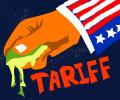
A bipartisan group of US senators has introduced a comprehensive bill imposing extensive sanctions on Russia, with India identified as one of five countries that could incur tariffs for its continued purchase of Russian oil.

India is set to introduce a new amendment to its anti-paper leak law in the Lok Sabha, aiming to establish fast-track courts across all states and union territories for swift trials and significantly harsher penalties for exam malpractices, including jail terms of 5 to 10 years and fines up to Rs 50 lakh for individuals, and up to Rs 10 crore for organised crimes.

The Rajya Sabha has passed the Prevention of Insults to National Honour (Amendment) Bill, 2026, making insult to the national song 'Vande Mataram' a criminal offence. The bill, which also covers other national symbols, was passed amidst protests from opposition parties regarding the NEET paper leak. Union Minister Nityanand Rai criticised the opposition's stance, emphasising the song's historical significance and its role in national unity.

The Lok Sabha has passed a Bill to amend the Payment and Settlement Systems Act, 2007, authorising the government to permit banks and service providers to levy charges on UPI and other electronic payment modes. This move aims to create a sustainable revenue model for the digital payments ecosystem, shifting from the current exemption of UPI transactions from such charges.

Amid renewed speculation about political realignments and a potential merger, senior leaders from two Nationalist Congress Party (NCP) factions met Maharashtra Chief Minister Devendra Fadnavis. NCP (SP) working president Supriya Sule clarified her party's position on the proposed Delimitation Bill, stating that while a uniform 50 per cent increase in seats across states would be hard to oppose, any final decision would be made after discussions within the INDIA bloc.

Monday's proceedings demonstrated that the legislative debate has become inseparable from the broader political crisis surrounding the NEET controversy.

Amidst widespread student protests over the NEET paper leak, the Indian government has introduced the Public Examinations (Prevention of Unfair Means) Amendment Bill, 2026, in the Lok Sabha. The bill proposes significantly stricter punishments, including jail terms of up to 10 years and fines of up to Rs 50 lakh for individuals involved in paper leaks, and up to Rs 10 crore for organised crimes, aiming to enhance transparency and fairness in public examinations.

The Lok Sabha has approved an amendment to India's anti-paper leak law, introducing stricter punishments including jail terms of up to 10 years and fines of up to Rs 50 lakh, in response to recent large-scale student protests and the NEET paper leak case.

A bipartisan group of US Senators has agreed to fast-track a bill allowing the President to impose sanctions on major purchasers of oil from Russia and Iran. This legislation, known as the Lindsey O. Graham Sanctioning Russia and Iran Act of 2026, aims to restrict funding for Russia's war efforts and Iran's energy and weapons sectors, potentially impacting countries like China and India through tariffs and other restrictions.
